
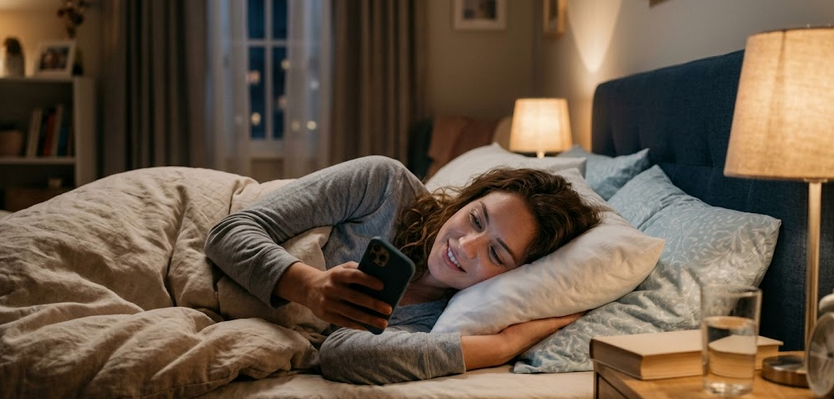
Have you ever promised yourself “just five more minutes” on Instagram, only to realize an hour has passed? This isn’t a lack of willpower; it is a hijacked dopamine system. Understanding the science behind screen time is the first step to reclaiming your mental clarity and physical energy.
The Biology of Screen-Induced Insomnia
When you scroll late at night, the blue light emitted by your screen actively suppresses melatonin production. Simultaneously, the unpredictable rewards of social media feeds trigger micro-spikes in dopamine, keeping your brain in a state of hyper-arousal. This unnatural stimulation elevates cortisol—the primary stress hormone—convincing your nervous system that it is still daytime. The result? Fragmented sleep cycles and a drained tomorrow.
Why You Need a Digital “Hard Stop”
Relying on sheer willpower at 11:00 PM does not work because your prefrontal cortex (the decision-making center of the brain) is exhausted from the day. The scientifically backed solution is to create an external friction point. Setting a strict bedtime notification and physically stepping away from your device interrupts the habitual loop. This automated cue signals to your brain that the day is definitively over, allowing your cortisol levels to drop.
Calibrate Your Rest with 37.Eight
This is where technology can heal what it broke. With 37.Eight, you do not have to guess your digital habits. You can track your exact screen time patterns, visualize your behavior on detailed charts, and set strict daily limits on dopamine-heavy apps like Instagram.
Most importantly, 37.Eight acts as your digital guardian. By setting our precise bedtime notifications, you create a non-negotiable boundary, reminding you to disconnect exactly when your circadian rhythm needs it most.
Take control of your metrics. Rest smart. Optimize your existence today.